The problem of dust accumulating inside the ducts of dust collectors requires immediate action, as it can lead to the ducts falling, reduced dust collection efficiency, and increased risk of fire and dust explosions.p>
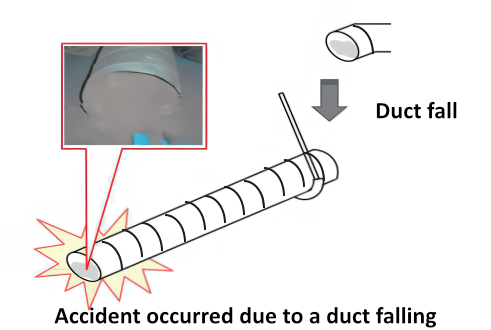
Insufficient Air Velocity (Conveying Velocity):
- If the airflow speed inside the duct is not high enough to carry the dust away, the dust will settle due to gravity and accumulate at the bottom of the duct or in curved sections. This is the most common cause.
Poor Duct Design:
- This includes improper piping diameter (too large), long piping distance, too many bends (especially sharp elbows), or structures where dust tends to stagnate mid-route.
- Ducts that are not smooth inside also tend to promote accumulation.
Nature of the Dust:
- Dust that is highly adhesive or hygroscopic (moisture-absorbing) tends to stick to the inner duct walls. Once attached, it grows and causes further accumulation.
Operation Method and Management:
- A drop in the dust collector's suction power (e.g., due to filter clogging) or intermittent operation can temporarily eliminate the force needed to carry away settled dust.
1. Ensuring Proper Air Velocity
The most important step is ensuring the minimum conveying velocity (scouring velocity) required for the dust to be transported properly without settling in the duct.
Checking and Adjusting Air Velocity:
- Generally, the appropriate air velocity inside the duct is considered to be estimated 15 m/s (though this varies depending on the dust type).
- Measure the actual velocity using an anemometer and, if insufficient, adjust the dust collector fan or use inverter control to maintain a constant suction airflow (duct velocity).
2. Improving Duct Structure
-
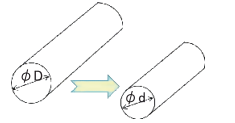
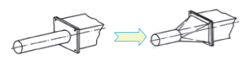
Optimizing Pipe Diameter:
-
Select the appropriate pipe diameter (neither too narrow nor too wide) to maintain the required air velocity.
-
-
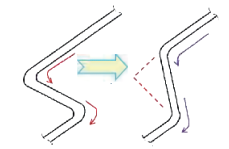
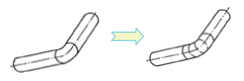
Bend Design:
-
Minimize bends, and when necessary, use bends with a gentle radius (R), avoiding sharp elbows.
-
-
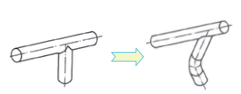
Shortening Piping:
-
Ideally, minimize the distance between the dust collector and the source, reduce horizontal runs, and incorporate a slope that is close to vertical.
-
-
Duct Material and Shape:
-
Use metal ducts with a smooth, flat interior and eliminate any steps or gaps at connection points.
-
3. Regular Cleaning and Inspection
-
Daily Inspection:
-
Monitor changes in filter clogging and suction power using the dust collector's differential pressure gauge or dust monitor to detect anomalies early.
-
-
Periodic Cleaning:
-
Regularly clean the inside of the duct. Methods include the rapping method (using high-pressure air to dislodge dust) or brushing methods to loosen settled dust, which is then suctioned out by the collector.
-
Inspection ports (clean-outs) can be installed in duct corners to facilitate easier cleaning.
-
-
Fire/Explosion Prevention:
-
Since accumulated dust can cause fires and explosions, in addition to cleaning, implement static electricity countermeasures (grounding, anti-static filters) and spark countermeasures (metal filters at the intake, pre-treatment devices).
-
◆ Solution point
-
Adjust the airflow speed inside the duct to match the type and properties of dust.
-
Select a duct route that minimizes pressure loss.
◆ Benefits
-
Prevent damage caused by dust inside the duct.
-
Resolve insufficient static pressure in the selected fan.
-
Stabilize dust collection airflow.
-
Reduce maintenance frequency.

Our dust collector experts will answer your questions. We look forward to hearing from you about any problems with your existing dust collector or any consultations regarding new dust collectors.
